We Control Every Step. So You Can Trust Every Bag.
From cherry to export-ready green coffee — all under one roof. Great specialty coffee and responsible farming aren't two separate goals — they're the same one.
Raised African Beds
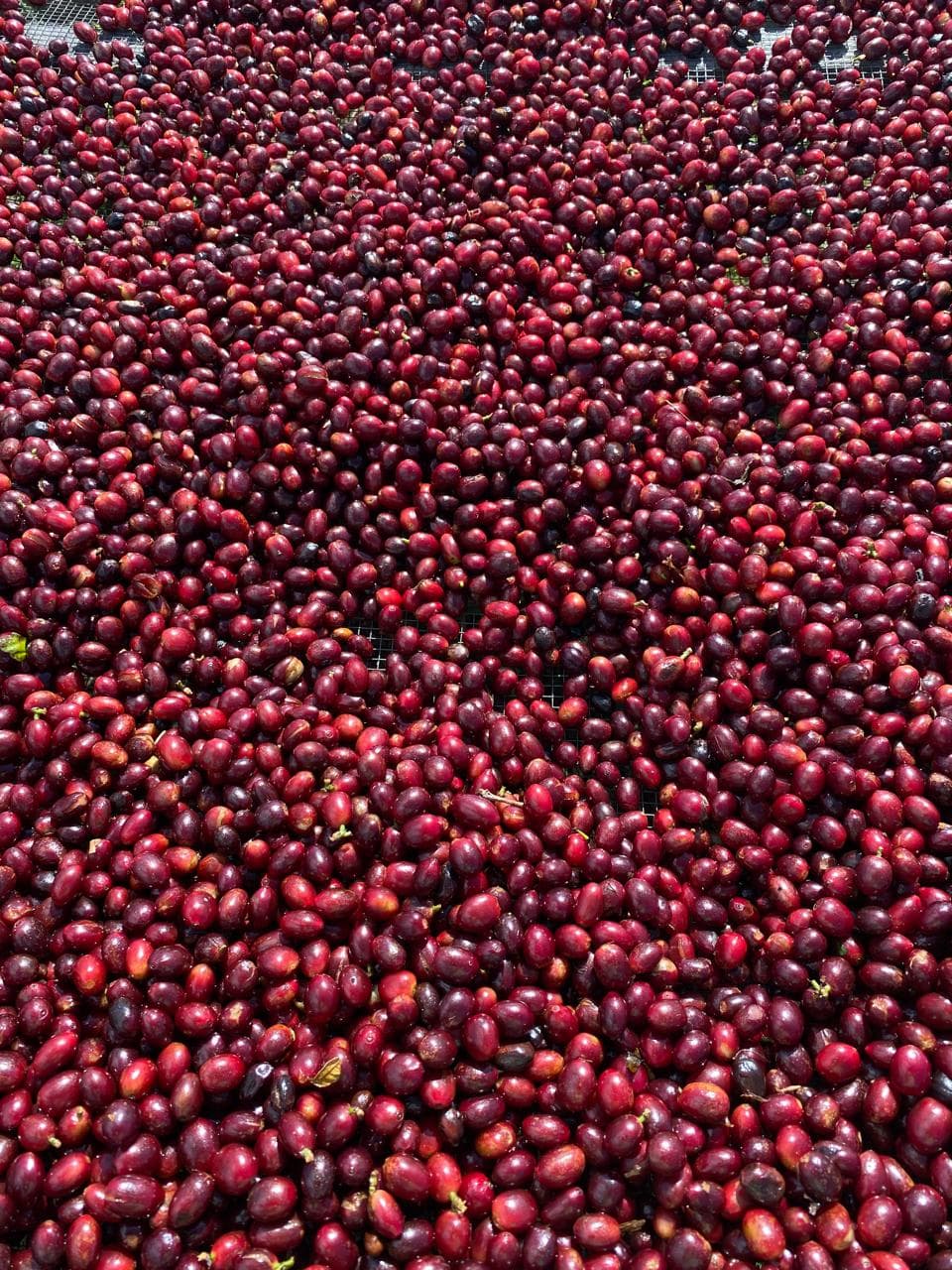
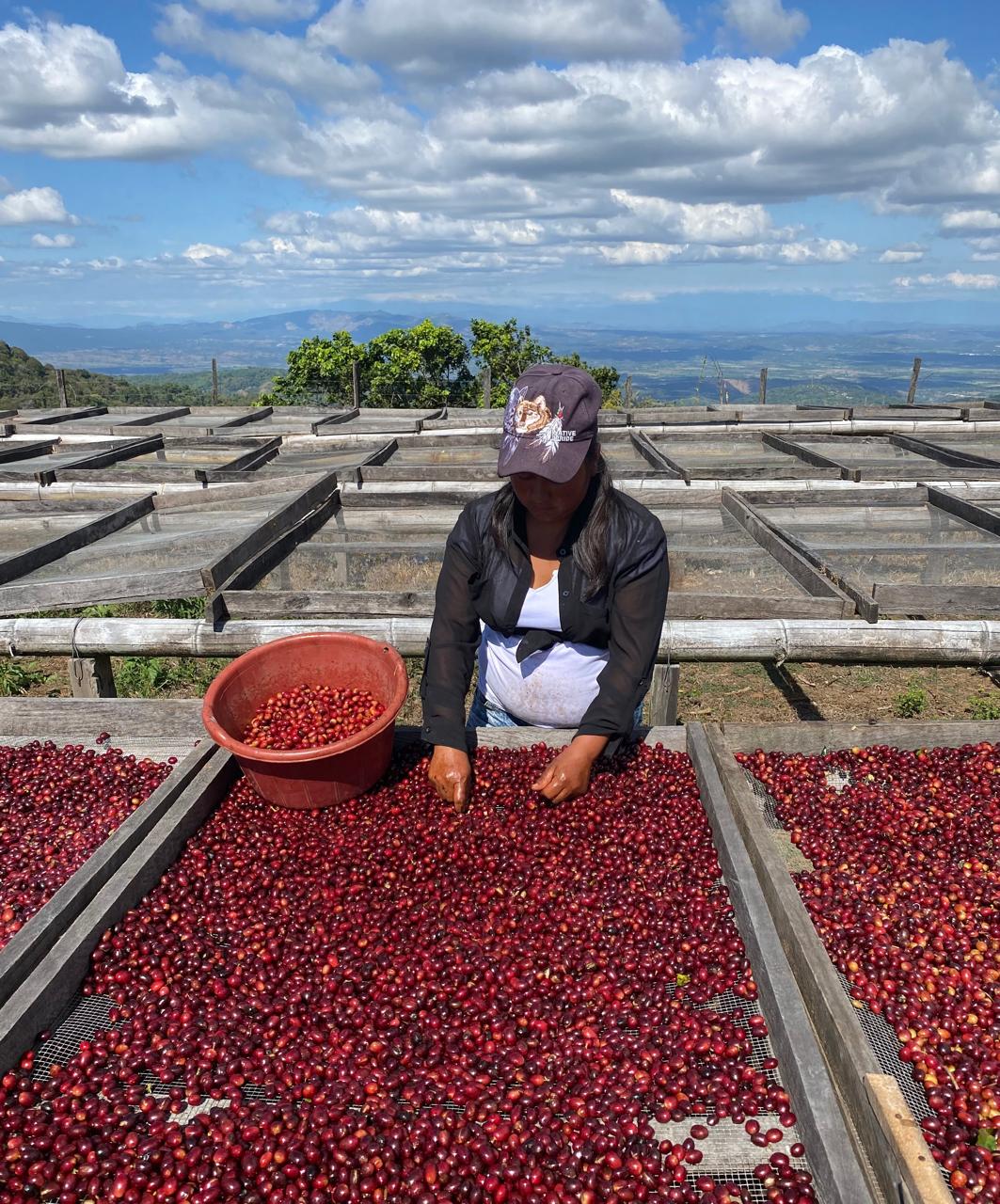
Most of our coffees dry slowly on raised African beds — waist‑high wooden frames strung with mesh that keep each parchment layer suspended in moving air. By lifting the coffee off the ground, we get airflow above and below the beans, which means cleaner lots, more even moisture, and far less risk of mold or unwanted fermentation.
It's extra work to rake and turn the beds throughout the day, but it gives us what we care about most: sweet, transparent cups where the variety and place shine instead of processing defects.
Processing Methods
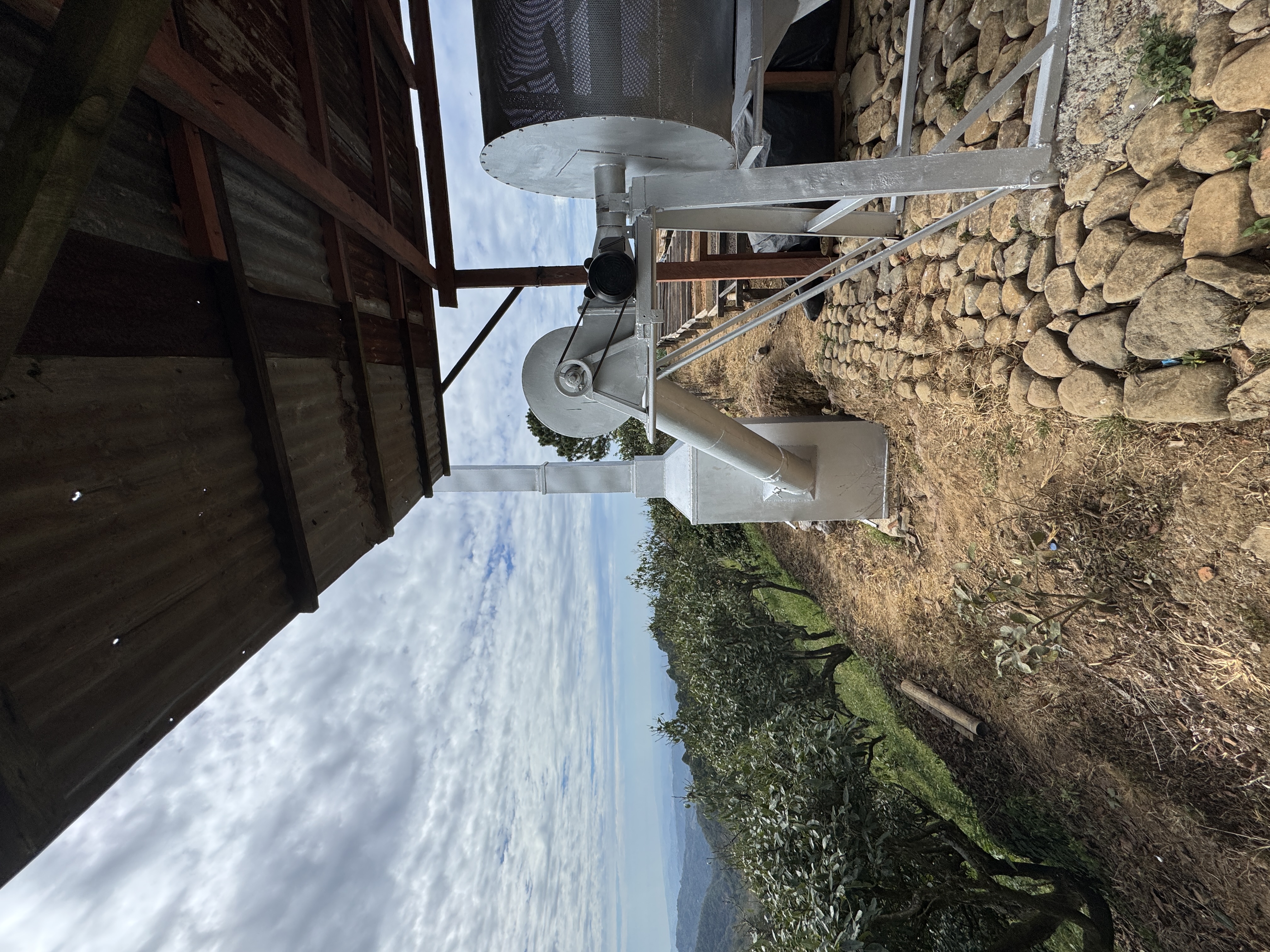
Washed / Fully Washed
Clean, bright and transparent — washed lots let the terroir and varietal speak without interference. Expect clarity in every sip.
Natural
Dried whole on raised beds under the Salvadoran sun. Naturally processed lots develop a heavier body with fruit-forward sweetness and wine-like complexity.
Honey
The ripe cherries are depulped to remove the skin and most pulp, leaving a sticky and honey-like mucilage layer on the beans that ferments during sun-drying on the african beds. This creates a flavor profile that blends sweetness and body of natural processing with clarity and brightness of washed coffees.
From Cherry to Green Coffee
Selective Harvesting
Every cherry is hand-picked at peak ripeness. We do not strip-pick. Our team returns to each tree multiple times during the harvest window to ensure only ripe cherries are collected.
Reception & Sorting
Freshly picked cherries are floated and sorted to remove defects and under-ripe fruit before processing begins.
Processing
Depending on the lot, cherries go through our washed, natural or honey processing stations. Each method is managed precisely to achieve the intended flavor profile.
Drying
Coffees are dried on raised African beds with regular turning and careful monitoring of temperature and humidity.
Dry Milling & Grading
Once dried, parchment coffee is rested, then milled, graded and screened to ensure consistency across every bag.
Quality Control & Cupping
Every lot is cupped in-house before being offered to buyers. We share cupping notes, SCA scores and full lot documentation with every order.
Export
We handle all export logistics from El Salvador, including phytosanitary certificates, ICO certification and shipping coordination. We export FOB Acajutla, El Salvador.
Full Chain of Custody
From Our Plots to Your Container
Every bag we export can be traced back to the exact plot where it was grown. We control every stage of production — no third-party mills, no anonymous blending, no gaps in the chain.
GPS-Mapped Plots
Every lot is harvested from a named, GPS-mapped plot on Finca Montecristo. We know exactly where each coffee comes from — down to the specific rows of trees.
Fully In-House Processing
Wet processing (washing, pulping, fermentation), drying on raised African beds, and dry milling are all done in-house. No third-party wet or dry mills. The farm controls the coffee from cherry to export-ready green — continuous quality is fully in our hands.
Complete Lot Documentation
Every lot ships with full documentation: lot name, variety, processing method, harvest date, SCA cupping score, cupping notes, and phytosanitary and ICO export certificates.
EUDR-Ready Traceability
The farm's plots are GPS-mapped and available for EUDR due diligence statements for European buyers. Finca Montecristo can provide polygon data for every production plot.
Community Impact
Coffee in El Salvador is a livelihood, not just a product. Our farm employs workers from the surrounding communities of La Libertad, offering fair wages, safe working conditions and consistent employment across the harvest season.
We believe that what's good for our community is good for our coffee — and that long-term relationships with the people who work our land produce better results than short-term thinking ever could.
Sustainability
At Araucarias Coffee, we farm under native shade trees that protect local wildlife, reduce erosion and create the microclimate that gives our coffee its character.
We actively manage water use throughout our processing operations, treating wastewater before returning it to the environment. Our drying infrastructure is designed to minimize energy consumption while maximizing quality control.
Shade Grown
Biological Corridor
Headwater Stewardship
Soil Care
Agroforestry
Fair Wages